Christian Ivan Birrueta Vargas (7°A)
Christian Ivan Birrueta Vargas (7°A)
10 English and heat transfer module. terms
This glossary serves to understand some of the basic concepts of heat transfer, which were rescued from a summary reading on the subject. The main topic of this glossary is convection which can be both natural and forced due to the speed of a fluid, the main terms to understand this form of heat transfer are detailed below.
- Convection heat transfer coefficient
- Noun.
- It is the rate of heat transfer between a solid surface and a fluid per unit area per unit temperature difference, they are determined differently for natural or forced convection.
- Example: The CONVECTION HEAT TRANSFER COEFFICIENT can be determined from the Nusselt relations.
- en: Coeficiente de transferencia de calor por convección.

- Critical Reynold’s number
- Noun.
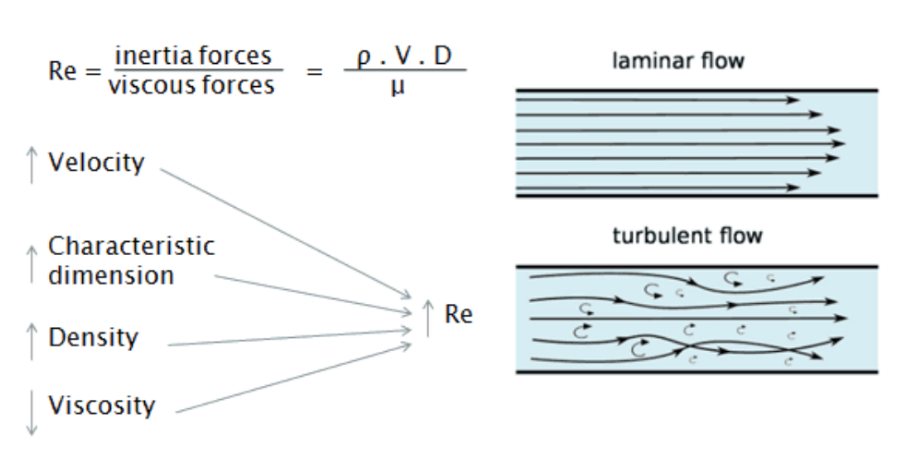
- The critical Reynolds number determines if a flow is laminar or turbulent, for example for Re<5 ×10^5 the flow is laminar, if the number is greater the flow would be turbulent.
- Example: Generally, a fluid that travels through a pipe has a Reynols number lower than the CRITICAL REYNOLD'S NUMBER.
- en: Número crítico de Reynolds.

- Friction Coefficient
- Noun.
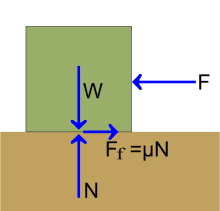
- It links the opposition to sliding offered by the surfaces of two bodies in contact according to the intensity of the mutual support they experience. It is a dimensionless coefficient.
- Example: Ice on a polished steel sheet has a low COEFFICIENT OF FRICTION.
- en: Coeficiente de fricción.
- Kinematic viscosity
- Noun.
- Is a measure of a fluid's internal resistance to flow under gravitational forces. It is determined by measuring the time in seconds, required for a fixed volume of fluid to flow a known distance by gravity through a capillary within a calibrated viscometer at a closely controlled temperature.
- Example: The KINEMATIC VISCOSITY η decreases with great intensity in those liquids with an increasing temperature.
- en: Viscosidad cinemática.

- Laminar flow.
- Noun.
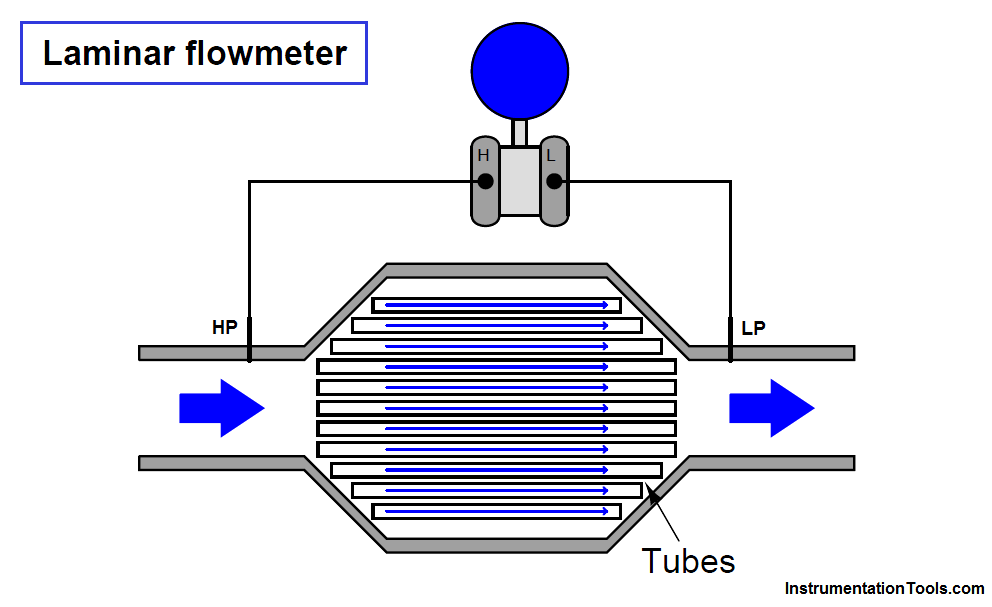
- Laminar flow or laminar current is called the movement of a fluid when it is ordered, stratified or smooth. In laminar flow, the fluid moves in parallel sheets without intermingling and each fluid particle follows a smooth path, called a streamline.
- Example: LAMINAR FLOW is typical of fluids at low velocities or high viscosities.
- en: Flujo laminar.
- Nusselt number
- Noun.
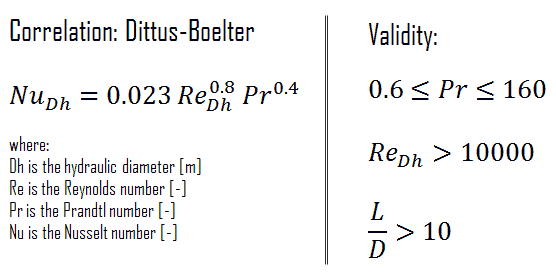
- It is a dimensionless number that measures the increase in heat transfer from a surface through which a fluid flows (heat transfer by convection) compared to the heat transfer if it occurred only by conduction.
- Example: Unlike other dimensionless numbers, the NUSSELT NUMBER is used for both natural and forced convection.
- en: Número de Nusselt.
- Prandtl number
- Noun.
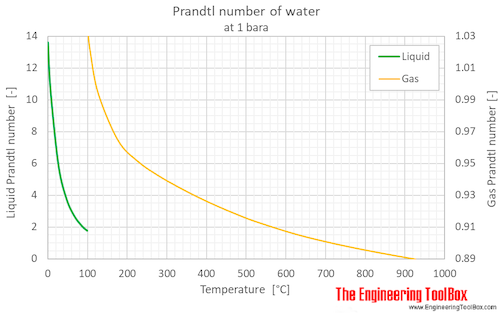
- Is a dimensionless number proportional to the quotient between the diffusion rate of the amount of moment (viscosity) and the thermal diffusivity.
- Example: In air the PRANDTL NUMBER depends on the temperature.
- en: Número de prandtl
- Reynold number
- Noun.
- The Reynolds number (Re) is a dimensionless number used in fluid mechanics, reactor design, and transport phenomena to characterize the motion of a fluid. Its value indicates whether the flow follows a laminar or turbulent pattern.
- Example: A high NUMBER OF REYNOLDS indicates that the fluid is turbulent, or a combination of laminar and turbulent.
- en: Número de Reynolds.
- Shear stress
- Noun.
- Is a force tending to cause deformation of a material by slippage along a plane or planes parallel to the imposed stress. The resultant shear is of great importance in nature, being intimately related to the downslope movement of earth materials and to earthquakes.
- Example: SHEAR STRESS may occur in solids or liquids; in the latter it is related to fluid viscosity.
- en: Esfuerzo cortante.

- Turbulent flow
- Noun.
- Is one in which there are fluctuations in the flow all the time and the particles invade the path of the adjacent particles, mixing and moving in a random way.
- Example: The flow of water in rivers or the movement of air near the earth's surface are typical examples of TURBULENT FLOW.
- en: Flujo turbulento.